7 hours ago
Mexico's Heritage Shines As Resorts Put Culture Over Cliche
Ashley Wali READ TIME: 6 MIN.
A new Deloitte study projects Mexico will be the fifth most visited country worldwide by 2040, as global interest drives tourism growth. Despite a drop in international travel to the United States, Americans are leaving the country more than ever, and our neighbor to the south remains a favorite destination. Luxury and millennial travelers to Mexico seek culture, rejecting the stereotype of an all-inclusive cocoon.
Eighty-seven percent of luxury travelers look for authentic and exclusive cultural experiences when they travel, according to the Capital One Luxury Trendcast 2026 report. Approximately 60% of millennials consider authentic cultural experiences to be the most essential aspect of travel. Demand among this group for tours that feature biodiversity, cultural preservation and sustainability is expected to grow 5.1% annually from 2025 to 2030, according to Grand View Research. Throughout Mexico, resorts rise to meet the moment.
Preserving culture as tourism expands
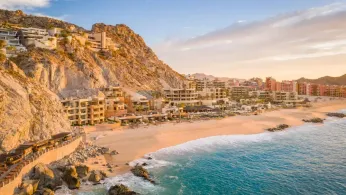
At Waldorf Astoria Los Cabos Pedregal, the local heritage shapes the guest experience. From the hotel entrance chiseled through a mountain tunnel to the rough-hewn, lacquered doors throughout, you can't help but feel grounded in Mexico.
The establishment is walkable to major sites in Cabo San Lucas, a city quickly developing into a world-class tourist destination, with the resulting construction and traffic. Despite record visitor numbers in 2025, this hotel delightfully shuts out all the noise.
Newly renovated guest rooms pair modern amenities with the warmth of a Mexican hacienda, while cheerful bathroom tiles with original artwork by Mexican artists compete for attention. The real challenge is tearing your eyes from the ocean views that grace every room.
So much more than tequila and tacos
In the hotel's Peacock Alley, guests embark on a journey through Mexico's most important spirit, distilled from agave. Tequila, made from the blue agave plant, is just one of the over 200 varieties of agave native to Mexico.
Expert guides teach visitors about several other mezcal varieties, pointing out flavors and scents like a wine sommelier. The lesson spans history, geography and culture, paired with gourmet snacks and whale sightings in the winter months. The visit ends with a keepsake bottle of your own custom mezcal blend and a much deeper appreciation of agave in Mexican culture.
When nothing but tequila will do, visit Casa Salles in the town of Tequila, Jalisco. Adjacent to the La Guarreña distillery, which makes the renowned tequila brand El Tequileño, this 25-room boutique hotel is as close to the source as you can get. Guests enjoy exclusive tastings and tours while learning the secrets of tequila and the brand's founder, Don Jorge Salles Cuervo of the famous Cuervo family.
Living with the land
An hour up the road from Los Cabos, near Todos Santos, one hotel puts on a master class in working with the land. Opened in 2023 after a massive expansion and renovation, the Kimpton Mas Olas Resort and Spa keeps things as local as possible.
General Manager Armando Gonzalez proudly rattles off the resort's statistics, including 87% of the hotel restaurants' herbs and vegetables are grown on site. Executive Chef Sandro Falbo guides guests to the chicken coop and one of the resort's eight gardens to gather eggs and pick vegetables that his team whips into an omelette for breakfast.
Neem trees throughout the property provide shade, but that's not all they do. Their seeds are collected and pressed, creating a natural mosquito repellent supplied to guests. At the spa, visitors to the apothecary create custom scents and oils using botanicals grown on the resort.
Even the laundering process was rethought to minimize impact. A machine separates soap particles from gray water, which is diverted back to the land for irrigation. The soap is compressed and donated to a local business, which converts it into limewash paint and sells it.
Perhaps the most impressive example of Mas Olas's commitment to the land, however, was its decision to geotag each plant disturbed during the building process of its oceanfront suites. Plants were moved to the on-site nursery before being replanted in their same location following construction, which provides the suites a living roof and a secluded feel. The process salvaged 97% of the plants displaced by the construction.
Culture becomes personal
On the Nayarit coastline, culture comes with a personal touch. "At Four Seasons Resort Punta Mita, Enrique Alejos has held the Cultural Concierge role for more than two decades, sharing his knowledge of local culture, history and nature through lectures, guided experiences and community programs," shares John O'Sullivan, regional vice president and general manager.
A conversation with Alejos reveals how passionate he is about making guests fall in love with Mexico by educating them about its rich history. For families, Alejos organizes chocolate-making classes with just enough history to leave kids educated but not bored. Guests of all ages enjoy a bead workshop, where intricate bead patterns hold religious meaning for the Huichol, the indigenous people native to Nayarit state.
He is especially proud of the sea turtle protection program, which he started 15 years ago, that is coming full circle, with babies hatched in the program returning home to lay their own eggs. Like those sea turtles, guests come back year after year to dive deeper into Mexico with Alejos as their guide.
The ceremony of culture
Nearby neighbor Conrad Punta de Mita envelopes guests in Mexico's history with spiritual ceremonies rooted in ancient tradition. Guests choose between three guided experiences that draw on ancient practices from the Huichol culture. Activities include sound therapy, copal incense and native herbs.
Visitors can join a cacao ceremony led by a shaman who guides them through a meditation towards peace and spiritual awakening. Sweat out your toxins, both physical and mental, in the temascal, a traditional dome-shaped clay sauna used by several pre-Hispanic cultures. At Conrad Punta de Mita, a shaman guide leads a temascal ritual that incorporates herbal steam and song, making this a spa treatment distinct to Mexico.
A journey through time
At Chablé Yucatán, Mayan heritage is alive and well. The Mexican family-owned wellness resort is nestled in the jungle outside Mérida, occupying a former agave factory. Salvaged wood from the 16th century agave hacienda finds new life as furniture in the resort. The cultural rituals draw visitors even further back in time.
Curious visitors learn about the melipona bee, a stingless variety native to North America and sacred to the Mayan people for its medicinal properties. Visit the on-site "meliponario", which preserves a beekeeping culture dating back 3,200 years, and taste honey gathered only after a shamanic blessing.
All the cultural practices offered by Chablé Yucatán are done in conjunction with Maya community members, allowing them to lead the way in preserving and sharing their culture. Local artisans feature prominently in the hotel's boutique as well, which showcases handcrafted textiles and products.
Changing the conversation
Just 90 minutes from Tijuana lies Mexico's largest winemaking region, home to the Banyan Tree Veya, Valle de Guadalupe. With its close proximity to the border, visitors would be forgiven for thinking that Valle de Guadalupe shares the reputation and crime statistics of its northern neighbor. Thankfully, this stretch of farmland is a far cry from cartel turf wars.
Nestled among the hills lies Pictograma, the onsite winery at Banyan Tree Veya, Valle de Guadalupe. As the only winery in the Americas dedicated to the grenache grape, Pictograma exposes travelers to the many expressions of this Spanish varietal ideally suited to the area's climate. The winery challenges assumptions about what Mexican wines can do, showcasing reds, whites, rosés and even sparkling versions of grenache.
Elsewhere on the property, Baja culinary powerhouses Benito Molina and Solange Muris oversee Amapola, the resort's new fine dining option. Like Pictograma, Amapola dives deep into the land. An evolving tasting menu focuses on what's fresh and local.
A vacation with soul
Luxury travelers prioritize authenticity. More than half of millennials say the most important part of their trip is a cultural experience. In Mexico, the options are numerous, with resorts taking visitors beyond the surface to share the food, drinks, spiritual practices and sustainability efforts that make Mexico so much more than a stereotype.
Ashley Wali is a Seattle-based travel journalist and curator of Wanderlux, specializing in luxury family travel, sports tourism and wellness travel. Her work has appeared in The Seattle Times, Boston Herald, The Philadelphia Tribune, Orlando Sentinel, and many more. Recent assignments have had her slurping oysters on Cape Cod and cruising the fjords of Norway.